 WhySlow
What is bluetoothd on Mac, and why is it using so much CPU?
bluetoothd is a macOS system process that manages Bluetooth devices like AirPods, keyboards and mice.
| Shown in Activity Monitor as | bluetoothd |
|---|---|
| Made by | Apple, part of macOS |
| WhySlow's verdict | Leave it |
See what’s slowing your Mac right now: download WhySlow free. One-click fixes cost $10, once or yearly.
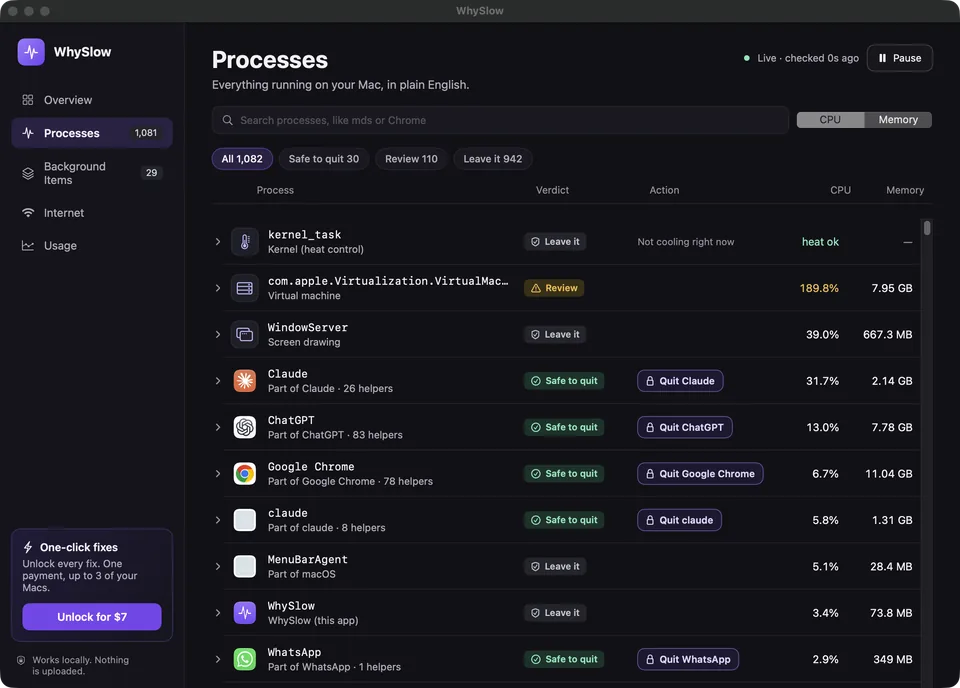
Why is bluetoothd using so much CPU?
Busy when pairing, with many devices connected, or with a device dropping in and out.
What bluetoothd does
bluetoothd manages every Bluetooth connection, from keyboards, mice and AirPods to game controllers and nearby Apple devices. Pairing, many connected devices, or a device that keeps disconnecting and reconnecting raise its CPU use. For a flaky connection, it can help to move away from sources of interference such as USB 3 hubs.
Should you quit bluetoothd?
No. bluetoothd is part of macOS. Quitting it can break things, and macOS starts it again anyway. When it is busy, it usually calms down once its work is done.
Is bluetoothd a virus?
The name bluetoothd alone can't prove a process is genuine, and this page isn't a security scan. Check where it runs from: genuine macOS processes run from system folders such as /System/Library and /usr/libexec. In Activity Monitor, double-click bluetoothd and choose Open Files and Ports to see its location. If it appeared right after you installed something unexpected, don't grant it more permissions, and ask the software vendor or Apple Support.
How to check bluetoothd on your Mac
Open Activity Monitor (Applications › Utilities), choose the CPU tab and type bluetoothd in the search field. The % CPU column shows how busy it is: 100% means one full processor core. Watch it for a minute while you repeat the task that felt slow.
What to do if bluetoothd stays busy
- Compare the activity with what you are doing: installing updates, syncing files and starting apps can all create temporary background work.
- If bluetoothd stays busy and the Mac remains slow, save your work and restart when convenient. Compare the same task afterward; a restart is a diagnostic step, not a guaranteed fix.
- Keep macOS up to date: Apple fixes runaway background processes in updates.
How WhySlow helps with bluetoothd
- Shows how much CPU and memory bluetoothd is using right now, in plain English.
Free to explain. One-click fixes cost $10, once or yearly.
Sources
The process description comes from WhySlow’s app catalog. Diagnosis depends on your workload and the version of macOS or the app you use. For an unfamiliar process, start with Apple’s guide to inspecting processes and reading CPU activity.
Need a broader starting point? Follow the slow Mac checklist or learn about memory pressure.